Melanoma ranks as the third most prevalent cancer in Australia, excluding keratinocyte cancers due to the lack of routine incidence data collection. Regular skin cancer checks are crucial for early detection. Annually in Australia:
- Approximately 80% of newly diagnosed cancers are skin cancers.
- Sun exposure is a primary cause of the majority of skin cancers.
- The incidence of skin cancer in Australia is among the highest globally, surpassing rates in Canada, the US, and the UK by two to three times.
Early identification and treatment significantly improve the chances of avoiding surgery, disfigurement, or even death, particularly for serious cases like melanoma. Sun protection is essential, especially if there’s a family history of skin cancer or other risk factors. Consulting a doctor at specialized skin cancer clinics for risk assessment and advice on early detection is recommended.
Being familiar with the appearance of your skin, especially spots and moles, facilitates the detection of any changes that may indicate skin cancer during self-examinations. Look out for:
- Crusty, non-healing sores.
- Small lumps that are red, pale, or pearly in color.
- New spots, freckles, or any moles changing in color, thickness, or shape over weeks to months.
Skin Checks with Our Doctors.
As a leading organisation devoted to effectively addressing skin cancer in Australia, we are committed to the comprehensive management of skin cancer and melanoma.
Our seasoned doctors, extensively trained in the prevention, diagnosis, and treatment of skin cancer, guide our processes with expertise.
The unique specialisation of our clinics allows us to seamlessly conduct examinations, diagnoses, and treatments all in one location, eliminating the need for a referral. This streamlined approach ensures a convenient and efficient experience for our patients
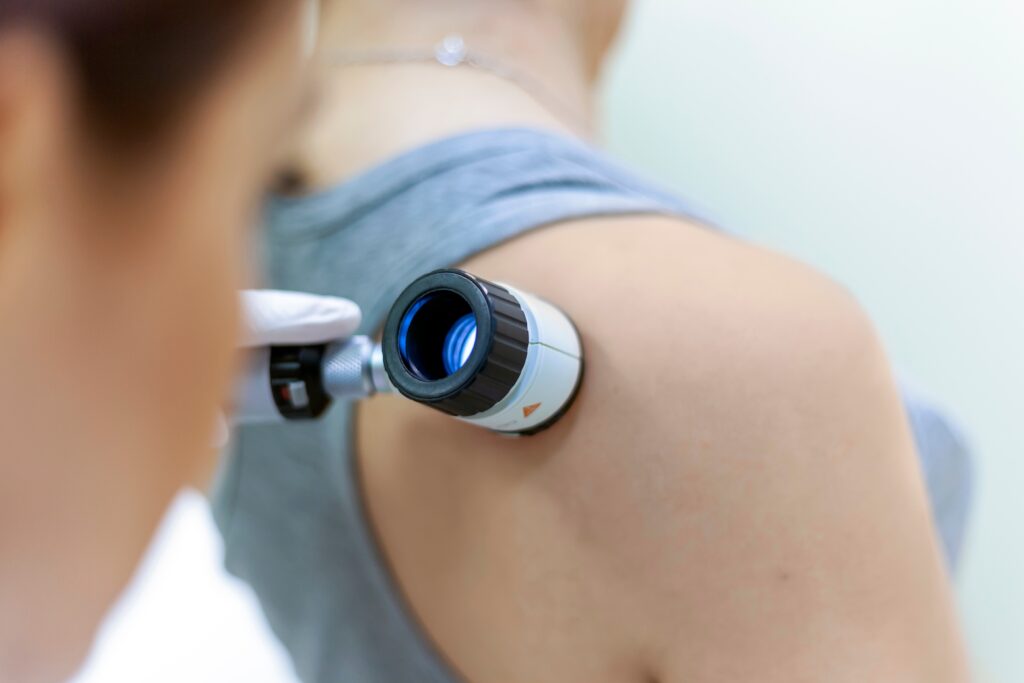
Whats involved with a Skin Check?

Typically, a skin cancer check is a brief, non-intrusive procedure completed within a fifteen-minute session. During this examination, a doctor utilizes a magnifying lamp and/or a hand-held skin microscope known as a Dermatoscope to inspect your skin, documenting any noteworthy spots.
For high-risk patients, or when deemed necessary by the doctor, total body photography may be recommended in a separate session.
Treatment procedures, such as biopsy or cryotherapy, are usually straightforward and can be performed during the checkup. However, more intricate surgical excisions will be scheduled for a subsequent appointment.